-
Infrastructure continuous deployment with terraform and atlantis
Atlantisis a self-hosted golang application that listens forTerraformpull request events via webhooks. I’ve incorporated it in my recent engagement in CriticalStart but also I use it in my private infrastructure.I think the idea is great for making
terraformworkflow more easy for infrastructure teams. Withatlantiseveryterraformchange need to go through review process. When PR is created it automatically runplandisplaying its output as a comment. Applying is also done by adding a comment. It’s highly configurable.Using
atlantisallows to closing wholeterraformworkflow on PR page! I always had the feeling that checking out branch and runningterraformlocally is a waste of time. Now you can just look atplanin PR, do the review and continue with other work.
Sounds good? Let’s dig it! -
Free git repository for private projects - GitHub vs GitLab vs BitBucket
Choosing provider for private git repositories back in the day was though.
GitHubis most known and I’d even say iconic. They started to offer unlimited private repos for paid plans in 2016.
GitLabandBitBucketat that time offered unlimited private repositories. Wow! They got me.
Currently alsoGitHubprovides unlimited private repositories and with recent introduction ofGitHub actionsI think it’s good time to do the comparison between them and see who provide best services in free plan.Note:
In this post I’m focusing on free plans but you are free to explore paid option. -
Fighting Google Analytics bounce rate
More and more updates on my blog made me look into another aspect of internet blog which is monitoring web traffic. I have
google analyticsenabled since the beginning but recently I have also addedbingandyandex.Duckduckgowhich is my main search engine don’t have webmaster tools. To be fair probably justgooglecover over 90% of search traffic so any additionals have small impact.When I looked into
google analyticsI saw bounce rate 100% on some acquisition types and time spent 0 seconds.
After some investigation I have both answer and way to improve that. -
Jekyll upgrade to version 4.0.0 with theme change
Recently I’ve written a post about updating my blog. As I have a lot of ideas for new posts, it’s natural that I wanted to be sure
jekyllis correct technology for me. I did some checkups and yeah!jekyllis the best technology for me right now.
Github support, development,git pushto deploy changes without any additional configuration or component is making it pointless to migrate away from it.This post will be short but for me it touches important topic of supporting and maintaing technology used to render this blog.
-
Prometheus on ECS - Proof of Concept
Two companies that I worked for recently used ECS (Elastic Container Service) as container orchestration tool.
If you have ever used it you know that it has somewhat limited observability out of the box.
You have two options to spin containers on ECS:Fargatewhich is serveless container engineEC2instances managed by you and your team
With
Fargateyou don’t really need to have insights into infrastructure spinning containers, it’s serveless.
More robust and less expensive solution is to host your own fleet ofEC2instances that joinECScluster. With that approach you need to manage them and know what’s going on there.In this blog post I will outline possible
prometheusintegration withECSusingterraform. My main goal was to improve observability by introducing node monitoring withnode-exporter+cadvisorand ingesting application metrics exposed by ephemeral containers. -
Terragrunt upgrade to terraform 0.12
For past six months I’ve been working with
terragruntwhich is a thin wrapper forterraformthat provides extra tools for working with multipleterraformmodules.
Idea behind is awesome - make repository of modules which follows best practices and show how to write IaC properly. In this post I will outline upgrading and write some commands that helped me to automate this process. -
How to run cheap Kubernetes cluster on AWS? pt1
Kubernetes
After containerization boom started, people realized that scheduling it is not as easy as it should be. That’s why I have interest in
mesos,docker swarm,rancher,nomadandk8s. There’s a need for a system that will take care of correct scheduling, priorities, eviction, logs, simple cluster scaling, upgrades, deployment methods, permissions and so on… My first experience withprodgradek8scluster was during time I worked for Spreaker/Voxnest. When I joined we had1.4and throughout the years it was updated to1.12(AFAIR). I’ve learned a lot, our relation (mine andk8s:D) had ups and downs but I was mostly satisfied and amazed by it.Kubernetesis cool technology, really complex but have long list of benefits! I don’t want to get into details of why I think it’s superior technology to run containers today but just to name few generic ones:- it has massive adoption in big tech companies
- a lot of development is going on, and I mean a lot
- big and helpful community
- enormous ecosystem
Or let
githubstars tell you the truth ;)kubernetes>57krancher>12knomad>5kdocker swarm>5kmesos>4k
-
Updating this blog
I haven’t been around here for quite some time. I know that you - random internet person - don’t really care so let’s get to the point. My blog was created with simplicity in mind but when I’ve returned after break I had to do improvements.
In this post I will explain what was done to improve it! -
How traceroute works
Traceroute is a diagnostic program that will show route of the packets in the network.
When you request a HTTP site like this blog, you request will traverse network to the destination and server there will generate response for you. It is not guaranteed that every request you will send to the same website will follow the same route.
If you want to know which path that packet took then you will use traceroute.
Traceroute for you, for you and for you! Traceroute for everybody!
-
Service Discovery with mesos-dns
In previous post I used mesos-dns to provide service discovery for cluster on mesos, which is
DNS-based service discovery for Mesos
How does it work?
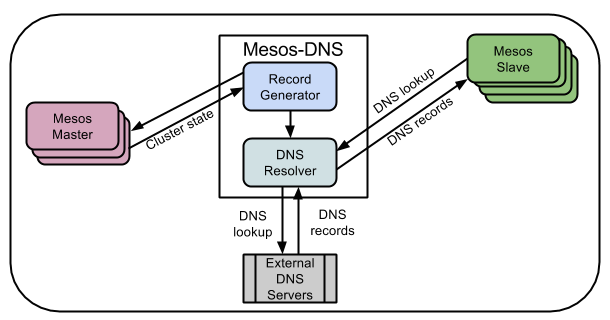
From time to time mesos-dns query mesos-master (so frameworks does not need to update it) and retrives data about running tasks so it can creatie appropriate DNS entries.
Any docker container that we run on marathon will be pingable via A record, any ephemeral port given by marathon will be visable via SRV record.